Summer’s Gone
Play Summer’s Gone
Summer’s Gone Screenshots














Summer’s Gone review
Explore the narrative depth, character development, and emotional themes of this acclaimed interactive experience
Summer’s Gone Season 1 stands out as a high-quality interactive visual novel that prioritizes storytelling and character development over typical genre conventions. This game centers on healing, hope, and love, following a young man navigating depression, isolation, and personal growth. Rather than focusing solely on surface-level content, the narrative delves into essential topics including mental health, ambition, and meaningful relationships. The game’s exceptional visuals, distinct character designs, and emphasis on player choice create an immersive experience that resonates with players seeking emotionally engaging narratives. Whether you’re curious about the gameplay mechanics, story themes, or what makes this visual novel unique, this guide provides everything you need to understand why Summer’s Gone has captured the attention of narrative-focused gamers.
Understanding Summer’s Gone Season 1: Core Gameplay and Story Elements
You boot up a new story-driven game, expecting the usual beats. Maybe some lighthearted fun, a few romantic options, a straightforward path. Then you meet the protagonist of Summer’s Gone. There’s no cheerful introduction. Instead, you’re thrust into the mind of a young man grappling with a profound, all-consuming emptiness. His name is never spoken aloud—he’s you—and his world is painted in shades of grey, both visually and emotionally. Right from the start, Summer’s Gone Season 1 gameplay signals that this isn’t your typical visual novel. This is a deep, sometimes uncomfortable, dive into a broken psyche, where every interaction is a step on a fragile path toward healing. 😔
The game immediately stands apart by daring to be quiet, to be sad, and to sit with that discomfort. Its power lies not in fast-paced action, but in the slow, deliberate unraveling of a person. If you’re looking for a shallow experience, you won’t find it here. But if you’re ready for a narrative that treats its visual novel mental health themes with raw honesty and its characters with profound depth, then your journey at ZPR University is about to begin.
What Makes This Visual Novel Different From Others
Let’s be honest: the visual novel space is crowded. Many titles follow a familiar formula—meet characters, make choices, pursue a romantic path, rinse, repeat. Summer’s Gone throws that handbook out the window. Its core philosophy is narrative-first, using its story-driven game mechanics not as a framework for titillation, but as the very engine for exploring human connection and trauma.
First, there’s the aesthetic. The game’s initial chapters are famously devoid of color, a direct visual metaphor for the protagonist’s depression. The world feels cold, distant, and unwelcoming. This isn’t just a stylistic choice; it’s a narrative one. You feel his isolation through the screen. As he begins to heal and connect, splashes of color slowly bleed back into the world. It’s a breathtakingly effective use of the medium that few other games attempt. 🎨
Second, and perhaps most crucially, is the game’s handling of intimacy. While the genre is often synonymous with explicit content, Summer’s Gone defiantly focuses on emotional and psychological intimacy first. Eroticism is not the goal; understanding is. The relationships are built through vulnerable conversations, shared silences, and moments of quiet support. The game argues that true connection is far more compelling and, frankly, more “adult” than mere physicality. This creates a space where the character relationship system is about building trust, not just racking up points toward a scene.
“For me, the characters and their growth are the story. The intimate moments should feel earned, a result of deep understanding, not just a menu selection. In Season 2, we’ll explore these bonds further, testing them and seeing how they’ve changed the protagonist’s world.” — Developer Ocean on the game’s narrative direction.
This approach extends to the pacing. The game isn’t afraid to let scenes breathe. You’ll have long walks, introspective moments, and conversations that don’t always push a “plot” forward but are essential for character development. The Summer’s Gone Season 1 gameplay loop is one of observation, reflection, and choice. You’re not just guiding a character; you’re slowly reconstructing a person, piece by fragile piece.
The Protagonist’s Journey: Depression, Isolation, and Personal Growth
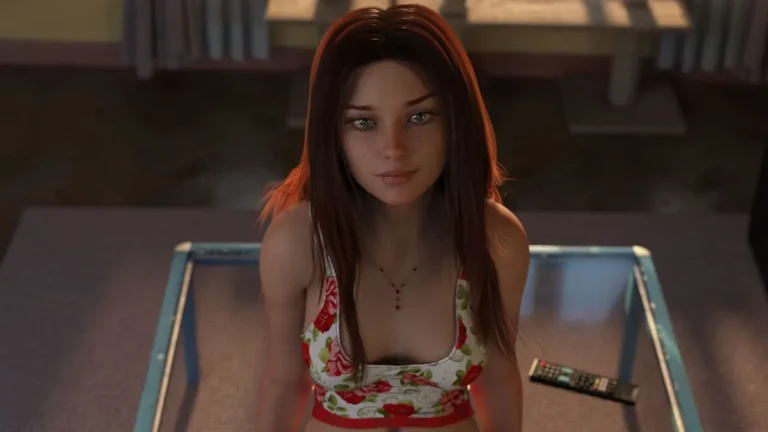
Who are you in Summer’s Gone? You’re a former high school basketball star whose promising future was shattered by a traumatic, mysterious event involving a girl named Summer. Now, you’re a shadow. You’ve lost your passion, your social standing, and your very sense of self. Enrolled at ZPR University, you’re a ghost moving through a vibrant world, haunted by shame and a crushing loneliness that feels physical. This is the heart of the Summer’s Gone protagonist journey.
The game doesn’t romanticize mental struggle. It portrays depression with a startling accuracy: the lack of motivation, the social withdrawal, the feeling of being an imposter in your own life. You’re not the charismatic hero. You’re often awkward, closed-off, and struggling to string sentences together in social situations. This can be challenging for the player—we’re used to controlling powerful avatars—but it’s this very vulnerability that makes his growth so meaningful.
Your journey is catalyzed by the people you’re forced to interact with. There’s Bella, the fiercely independent and initially hostile girl from your literature class who sees through your façade. There’s Nami, your childhood friend and now stepsister, whose cheerful persistence is a lifeline back to a time before the darkness. Each major character represents a different kind of relationship and a different challenge to your isolation.
The central visual novel mental health themes are woven through every interaction:
* Shame: From your failed basketball career to your social anxiety.
* Not Fitting In: Feeling like an alien on a campus full of “normal” students.
* The Struggle for Authenticity: Choosing between the easy mask of indifference and the hard work of being present.
Your growth is measured in small victories. Choosing to attend a study group instead of hiding in your room. Managing a genuine smile during a conversation. Standing up for someone, or yourself. The story-driven game mechanics are designed to make you feel the weight of these moments. This isn’t about becoming the most popular guy on campus; it’s about becoming functional, and then perhaps, someday, whole again.
Interactive Choices and Their Impact on Character Relationships
This is where Summer’s Gone truly shines and where your agency as a player is tested. The game’s philosophy that interactive narrative choices matter isn’t a marketing slogan—it’s the core of the experience. Every dialogue option, every decision to engage or withdraw, subtly shifts the tectonic plates of your relationships.
The character relationship system is intricate and often hidden. You won’t see a constant stream of “+1 Affection” pop-ups. Instead, the game tracks your stance with each character through a combination of visible stats and hidden flags. Your choices affect:
* Trust: Does the character believe you’re being genuine?
* Respect: Do they value your opinion and strength?
* Affection/Romance: Is a deeper connection forming?
* Specific Route Flags: Hidden checks that lock or unlock potential story paths later.
For example, early on with Bella, you can choose to be sarcastically defensive, quietly apologetic, or simply shut down. A sarcastic reply might amuse her slightly, building a rapport based on mutual sharp edges, but it could damage your Trust stat if she perceives it as insincerity. A vulnerable apology might increase Trust but could lower Respect if she sees it as weakness. There is rarely a universally “good” choice, only what feels right for the relationship you want to build.
This makes the Summer’s Gone Season 1 gameplay incredibly replayable. Pursuing a path with Nami requires nurturing a deep, familiar bond built on shared history and protective instincts. Going for Bella’s path means engaging in a fiery, challenging dynamic where earning her respect is paramount. Other characters, like the kind-hearted Sasha or the intelligent Vic, offer entirely different dynamics. Your interactive visual novel choices literally write the protagonist’s social world into existence.
Let’s look at a concrete example of how this system works in practice. Imagine a key early scene with Bella after a tense classroom interaction:
| Your Choice (Dialogue Option) | Immediate Character Reaction | Probable Impact on Relationship Stats | Long-Term Narrative Implication |
|---|---|---|---|
| “Just leave me alone.” (Cold/Dismissive) | Bella scoffs, rolls her eyes, and walks away. | Affection: Down. Respect: Slight Down. Trust: Neutral/Down. | Hardens her initial negative impression. Makes her path significantly harder to access, as you’re reinforcing walls. |
| “Look, I’m… not good at this. Sorry.” (Vulnerable/Apologetic) | She pauses, studies you with less hostility, gives a slight nod. | Trust: Up. Respect: Neutral. Affection: Slight Up. | Shows her you’re not just a jerk, but complicated. Opens a tiny door for future, more genuine interactions. |
| “What’s your problem, anyway?” (Confrontational/Defensive) | A sharp, witty retort. A verbal sparring match begins. | Respect: Up (for standing your ground). Trust: Down. Affection: Could go either way. | Establishes a competitive, fiery dynamic. This could be the foundation for a specific romantic route built on challenge and passion. |
See the nuance? 🎯 One scene, three vastly different trajectories. This level of detail is applied throughout the Summer’s Gone Season 1 gameplay. Choosing to confide in Nami about a nightmare might skyrocket your closeness with her but could trigger feelings of jealousy or concern that affect other relationships. Deciding to focus on basketball training might improve your self-worth stat (a hidden metric) but cause you to miss a crucial bonding moment with another character.
This is why interactive visual novel choices in this game feel so weighty. You’re not just picking what to say; you’re actively defining who this broken young man is becoming and who he will have beside him on that difficult road. It’s a powerful, immersive reminder that in life and in Summer’s Gone, our choices, big and small, are the architects of our relationships and our own recovery. The journey is hard, the themes are heavy, but the promise of connection and growth makes every thoughtful decision worth it.
Summer’s Gone Season 1 represents a significant achievement in interactive visual novel design, demonstrating that adult-oriented games can prioritize emotional depth and meaningful storytelling. The game’s commitment to character development, exceptional visual presentation, and thoughtful exploration of mental health and personal growth sets it apart from typical genre entries. Through its interactive choice system, players experience a personalized journey that respects their agency while delivering a cohesive narrative. The community’s enthusiastic response to the story-first approach confirms a growing audience for games that balance mature themes with genuine emotional resonance. Whether you’re drawn to narrative-driven experiences, character-focused storytelling, or games that tackle meaningful themes with maturity, Summer’s Gone Season 1 offers a compelling experience that extends far beyond surface-level entertainment. As the series continues with Season 2, the foundation established in this first chapter promises even deeper character exploration and narrative complexity.